Article
|
Industry Insights
How Real Estate Sales Continued Without In-Person Visits
SmartPixel
,
19 Jan 2026
In spring 2020, confinement measures forced the real estate industry to change fast. Sales offices closed. In-person visits stopped. Buyers were asked to make decisions remotely.
For many, this meant committing to a home they had never visited. For developers and leasing teams, it meant finding new ways to present projects clearly and credibly.
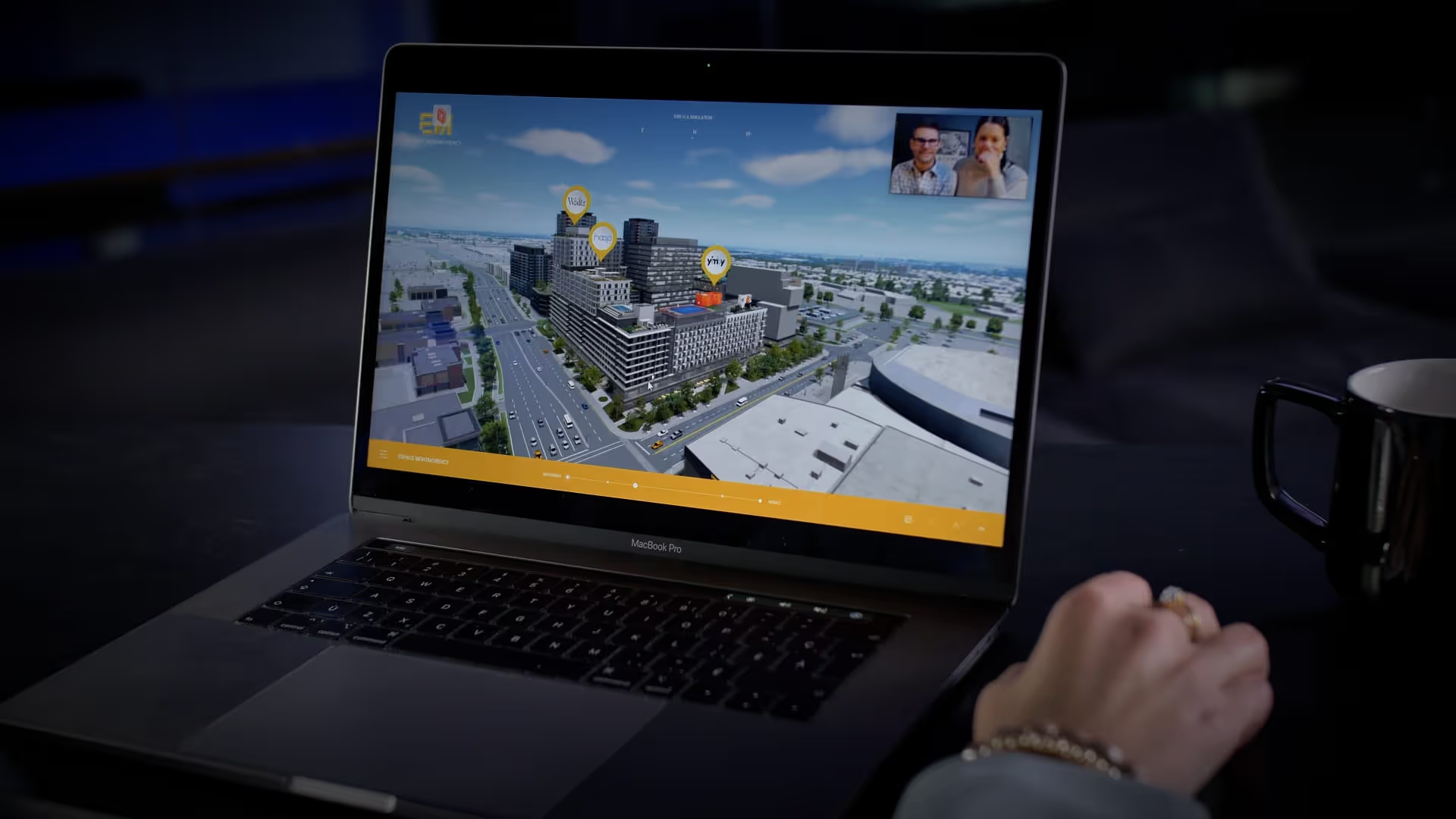
As reported by La Presse, projects like the Humaniti complex in downtown Montreal relied on virtual exploration to continue selling and leasing.
Buyers could review available units, compare layouts, explore shared spaces, and understand the surrounding neighborhood through visual and interactive tools. Sales teams remained available remotely to guide discussions and answer questions.
The experience was not identical to an in-person visit. But it proved effective enough for buyers to move forward with confidence.
With competition moving online, attention spans shortened. Static images and long explanations were no longer enough.
“It’s like speed dating. There’s much less time to understand a project,” explained Alexandre Lacoursière, cofounder and Vice President of Business Development at SmartPixel, in La Presse.
“Information has to be accessible instantly, and it has to be visual.”
Buyers wanted quick answers. Sun exposure. Views. Layouts. Nearby services. Interactive visuals made it possible to respond clearly and in real time.
During this period, interactive digital tools moved from nice-to-have to essential.
Teams increasingly relied on visual, interactive presentations to support remote real estate sales, leasing, and presales. The goal was not to replace human interaction, but to support it when face-to-face meetings were no longer possible.
Clarity became the foundation for trust.
Although the pandemic accelerated adoption, the shift did not disappear once restrictions eased.
Remote exploration, interactive presentations, and visual storytelling are now part of how many teams sell and lease real estate. Buyers proved they are willing to commit remotely when information is presented clearly and transparently.
This period marked a turning point.
When buyers cannot visit in person, clarity becomes the product. Interactive and visual tools are no longer optional. They are part of the modern real estate sales process.
.png)
.avif)
.jpg)