Article
|
Industry Insights
The Sales Experience Is Becoming a System: 4 Shifts from Inman NYC
SmartPixel
,
24 Feb 2026
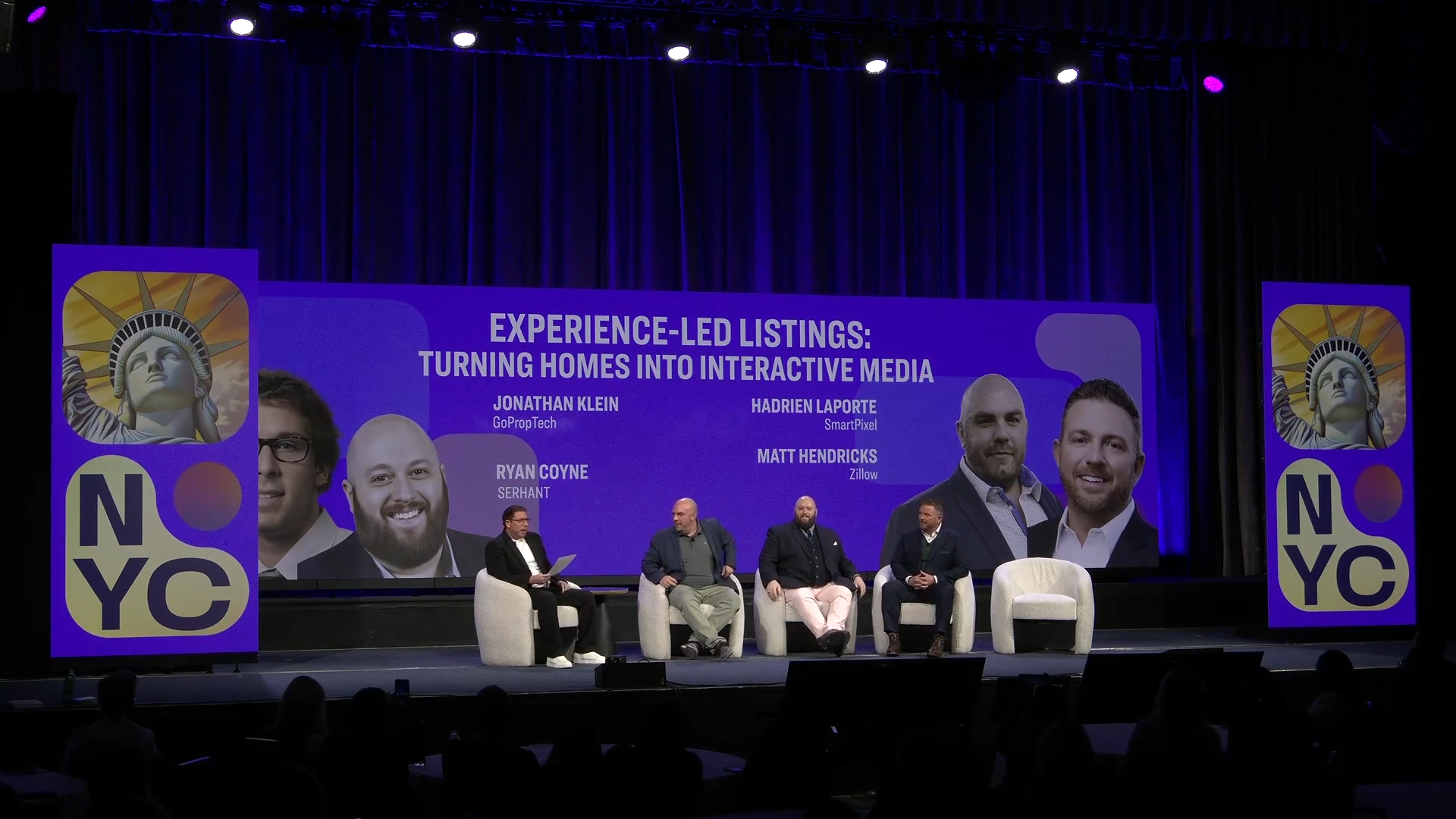
At Inman Connect New York this February, a consistent theme surfaced across conversations with brokers, developers, and technology leaders:
The way real estate is presented is becoming more structured.
For years, project marketing has relied heavily on static materials, individual presentations, and fragmented tools. What is changing now is not the importance of storytelling, but the growing need for repeatable systems that support how projects are explained, compared, and understood.
During a panel featuring leaders from Zillow, SERHANT., and SmartPixel, moderated by GoPropTech, several practical shifts emerged. These changes are already influencing how high-performing teams approach property presentation, particularly in pre-construction, luxury, and new development markets.
Below are the most actionable insights from that discussion.
One of the clearest signals discussed at Inman was the transformation of the brokerage or sales office into a more structured presentation space.
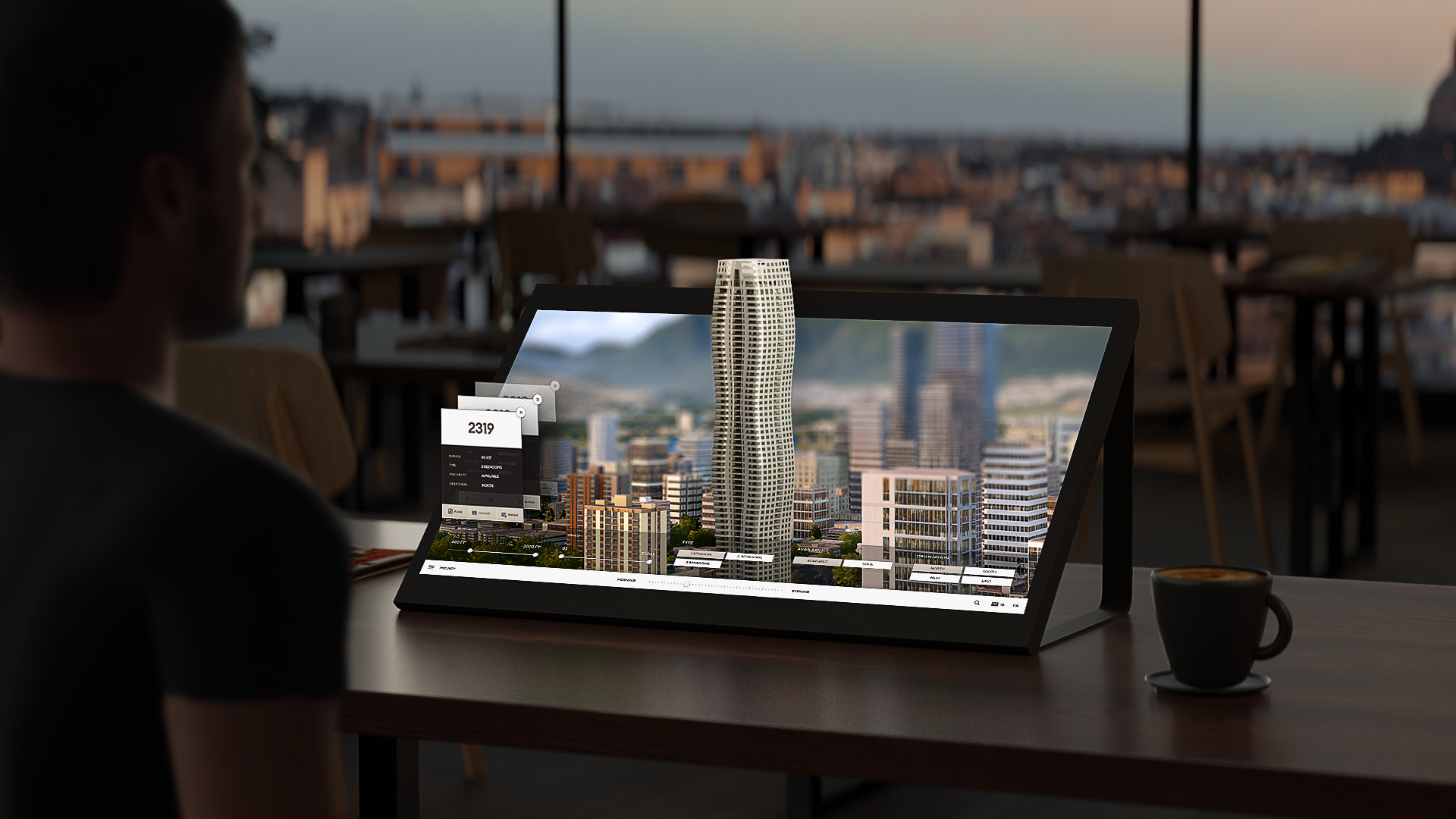
Instead of driving buyers to multiple locations to narrow options, many teams are increasingly using screen-first shortlisting, where clients explore several opportunities in one guided session before visiting physical properties.
“Why can't an office be more of a showroom… where you can fly them through, guide them through an experience… before you have to go put them in your car and drive them around to twenty different properties?”
— Matt Hendricks, Zillow
This shift is being enabled by two converging factors:
The impact is not only efficiency. It is decision quality.
When buyers understand options earlier, conversations become more productive and site visits more targeted.
Implications for teams
Real estate decisions involve uncertainty, particularly in new development or pre-construction scenarios. Buyers rely on signals to reduce that uncertainty.
The panel emphasized that confidence increases as more contextual understanding is provided during the presentation.
“The more layers that you put on there, the trust level gets higher and higher for that consumer… I'm more willing to buy at that point because I know what I'm getting myself into.”
— Matt Hendricks, Zillow
These layers often include:
The technology itself is not the primary value. Clarity is.
When buyers understand outcomes more precisely, hesitation decreases and momentum increases.
One of the more surprising insights discussed was how immersive presentation tools are influencing more than marketing conversations. They are influencing project decisions themselves.
A real example shared during the panel involved a multi-tower development where buyer feedback, generated through an interactive experience, affected how future towers were positioned.
“After showing this simulation for a few months, they got so much feedback from buyers about how those towers should be angled… they asked us to invert the angle because they believed they would have more sales doing so.”
— Hadrien Laporte, SmartPixel
This illustrates a broader industry shift.
Visualization is evolving from a marketing deliverable into a decision-support tool across stakeholders:
The earlier stakeholders understand outcomes, the more informed and confident decisions become.
Despite discussion around emerging technologies such as augmented reality and immersive environments, the panel repeatedly returned to a fundamental principle:
Technology changes. Narrative remains constant.
“We need to be narrative storytellers at our core, no matter what the medium… so we're not overly dependent on these devices either.”
— Ryan Coyne, SERHANT.
However, the closing insight from the panel captured where the industry is heading:
“The winners will be the teams that combine storytelling with a repeatable system.”
— Jonathan Klein, GoPropTech
Consistency is becoming the differentiator.
High-performing teams are developing structured workflows that ensure:
The competitive advantage is not a single technology platform. It is the system surrounding how projects are presented.
Organizations looking to evolve their sales approach can begin with practical adjustments:
These shifts are less about technology adoption and more about intentional design of the sales experience.
Real estate has always been experiential. What is changing is when that experience happens.
Buyers increasingly expect clarity before committing time, travel, or financial decisions. Teams that provide structured understanding earlier in the process create momentum faster and reduce uncertainty.
As projects become more complex and competition increases, the way developments are presented is becoming a strategic factor, not just a marketing one.
For organizations exploring how to improve buyer confidence earlier in the sales process, structured presentation environments are becoming an important part of the toolkit.
This often includes:
If you’re interested in seeing how teams are approaching this in practice, you can schedule a short walkthrough here.
.png)
.avif)
.jpg)