Article
|
Industry Insights
What Developers Get Wrong at MIPIM, and How to Stand Out
SmartPixel
,
06 Mar 2026
.jpg)
MIPIM is one of the few moments in the year when real estate projects are evaluated by a global audience in a matter of days.
Developers arrive in Cannes with ambitious plans, investment goals, and years of work behind them. Meetings are packed into tight schedules. Conversations move quickly. Attention is limited.
Most teams assume the challenge is visibility.
In reality, the bigger risk is clarity.
Projects rarely struggle because they lack quality. They struggle because stakeholders do not fully understand them within the time available. When investors, partners, or brokers cannot quickly grasp the vision, differentiation, or scale of a development, opportunities weaken.
Understanding where developers commonly fall short can help teams prepare more effectively and stand out in a highly competitive environment.
Many developers approach MIPIM as a branding opportunity.
They invest in booth design, brochures, render boards, and networking events to generate exposure. These elements matter, but they do not replace the need for clear communication.
Attendees are evaluating multiple opportunities each day. They are comparing projects, assessing credibility, and deciding where to focus attention. When presentations rely heavily on marketing materials without a structured narrative, conversations often remain surface-level.
The teams that create the strongest impact treat MIPIM as a decision environment, not just a promotional one.
Renderings and boards remain standard across the industry, but they have limitations, particularly for large or complex developments.
Stakeholders often want to understand:
Static visuals communicate aesthetics, but they rarely communicate spatial understanding.
As projects grow in complexity, presentation methods need to evolve to match.
Major events typically involve multiple representatives presenting the same development.
Executives, sales leaders, marketing teams, and partners may all describe the project from slightly different angles. When narratives are not aligned, credibility weakens.
High-performing teams prepare internally before the event. They define a shared storyline and ensure everyone communicates the same key messages.
Consistency builds confidence, especially when stakeholders are comparing several projects in a short period.
MIPIM calendars often become dense, with meetings scheduled back-to-back from morning through evening.
Without a clear presentation flow, conversations can become fragmented. Important details may be missed, and stakeholders may leave with incomplete understanding.
Teams that stand out usually follow a structured progression:
Structure reduces friction and improves clarity.
Real estate presentation is evolving.
Stakeholders increasingly expect to explore projects, not just view them. This is particularly important for developments that have not yet been built, where understanding relies entirely on communication tools.
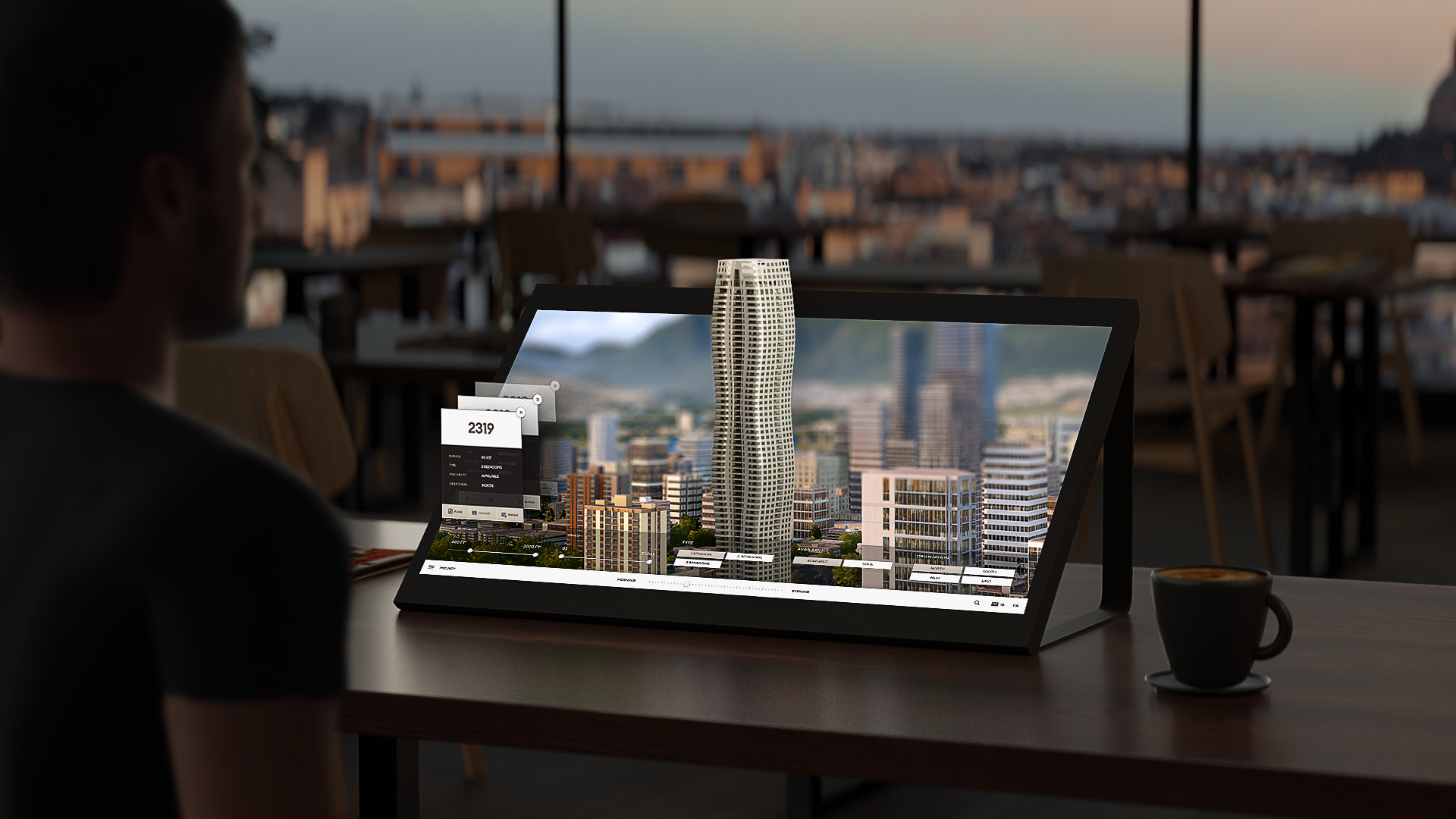
Interactive environments, digital twins, and immersive presentations are becoming more common in both sales galleries and global exhibitions. These tools help teams demonstrate scale, context, and lifestyle in ways that static materials cannot.
For developers presenting early-stage projects, this clarity can significantly influence perception and confidence.
The teams that generate the strongest engagement tend to focus on three priorities.
Clarity
Stakeholders understand the project quickly and intuitively.
Consistency
All representatives communicate the same narrative.
Confidence
Presentation tools reinforce credibility and professionalism.
Standing out rarely depends on the size of a booth or the number of events attended. It depends on how effectively the project is communicated.
SmartPixel works with developers and sales teams to create interactive digital twins used to present projects in sales galleries, investor meetings, and international events.
These platforms help teams communicate developments clearly before construction while maintaining consistency across presentations.
SmartPixel will be exhibiting at MIPIM 2026 from March 9–13 at booth P-1.E1 alongside Onyx Technologies, ReflectiveWorks, PlanPoint, and Elecom.
Developers attending the event who want to explore new approaches to project presentation can connect with the team during the week. Book your consultation here.
.png)
.avif)