Article
|
Industry Insights
How Developers Can Escape the Pre Sale Dead Zone & Move Condos Faster
SmartPixel
,
11 Sep 2026
.png)
When pre sales move slower than a real estate developer expects, the instinct is to blame the market, interest rates and seasonal trends. To be fair, none of these forces are fiction. But they're also not something you can do much about on a Tuesday afternoon.
Here's what you can do something about: make it easy for a buyer to visualize and understand a condo project that doesn't exist yet.
That's the real lever. Interest rates, sentiment, and seasonality are conditions developers operate inside of. Buyer comprehension is a variable developers actually control through what they build, what they show, and how a buyer is walked from curiosity to conviction. Selling the vision of a multiunit condo requires making that vision unmistakably clear, and when a buyer can't fully grasp what they're purchasing, or can't trust the outcome enough to act early, they walk away. Most marketing teams respond by increasing ad spend and adding more listings, but doing this usually just produces more hesitant leads faster.
When pre sales stall, developers often assume affordability is the barrier, but it rarely is. The more accurate diagnosis is that buyers don't trust the outcome they're being asked to purchase. Trust, unlike the market, is something a sales process can be engineered to build.
A useful test is to ask three questions:
1. Can a prospective buyer understand what daily life in the finished building looks like within ten seconds of engaging with your materials?
2. Can that buyer explain the project to a spouse or business partner without a member of your sales team walking them through it?
3. Does the buyer feel like they're seeing the finished product, or merely a promise?
If the honest answer to any of these is no, that's not a pricing problem; it's a comprehension gap, and comprehension gaps are fixable in ways affordability isn't.
Imagine this scenario: two buyers looking at the same two-bedroom unit on the 12th floor.
Buyer A gets a PDF floor plan and three renders of the lobby and leaves with a mental model built from inference "I think the kitchen faces the living room, and I assume that view render is accurate for my floor."
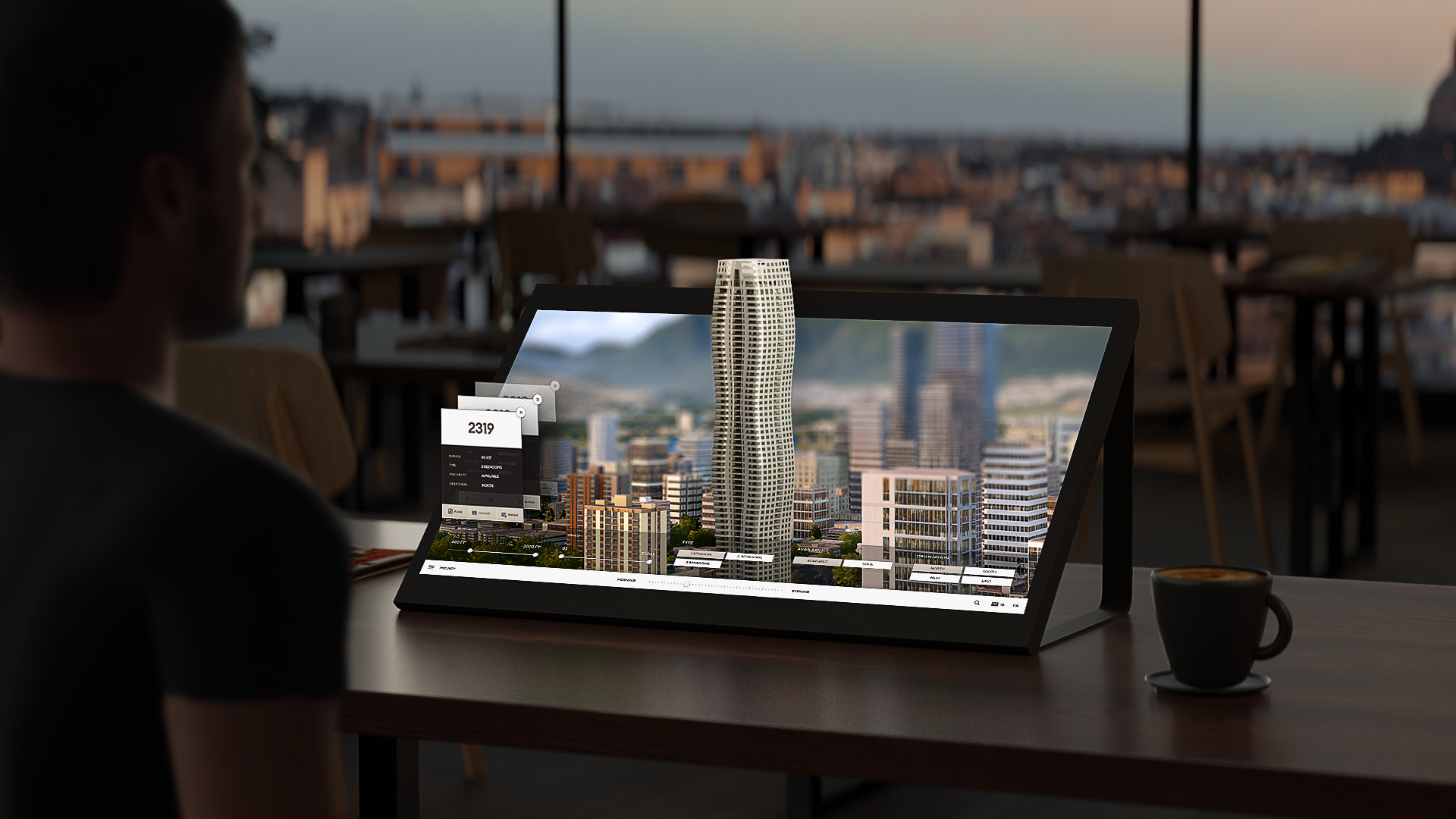
Buyer B can view the entire building in 3D on a screen, rotate the unit, stand at the window to see the actual view at that height, and toggle between two finish packages. They leave with an answer to the only question that matters: what will this feel like to live in?
One of those buyers needs a follow-up call to resolve doubt. The other is already resolved.
The standard preconstruction playbook has changed little in years: publish renders on a website, run paid ads, collect leads, hand them to a sales team. That model assumes the buyer will do the cognitive work of translating static images into a lived experience and that assumption is exactly where the pipeline breaks. Every time a buyer has to fill in a gap themselves ("is that render to scale?" "does unit 1207 actually get that much light?"), a developer is outsourcing a piece of the sales process to the buyer's imagination, and imagination is an unreliable closer.
High-performing pre sales systems flip that responsibility back onto the materials themselves. Instead of asking buyers to interpret flat renders and floor plans, buyers explore the space directly, building certainty incrementally instead of being asked for a leap of faith. This is the shift that compresses the sales cycle; not louder or more frequent campaigns.
Strip away the tactics, and the fix comes down to three things a real estate firm marketing team directly controls:
1. Make the product instantly comprehensible. If a buyer has to study a project to understand it, the sales process is already too slow. Layout, atmosphere, and value should register almost immediately, without a guided walkthrough to fill in what the static assets left out. A simple gut check: hand your current sales materials to someone unfamiliar with the project and time how long it takes them to describe, unprompted, what it would be like to live there. If it's more than ten seconds, that's the gap costing you deals.
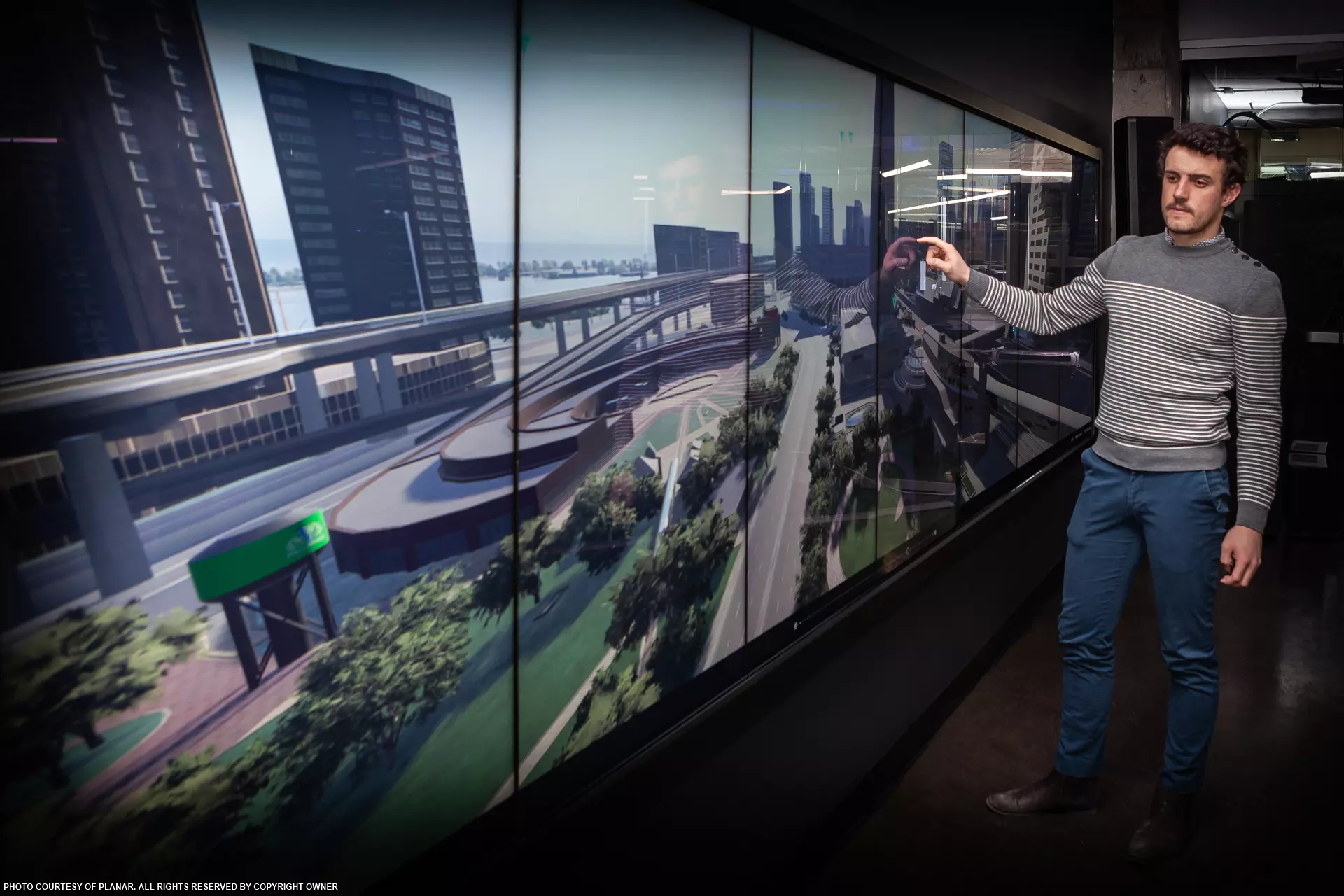
2. Replace imagination with interaction. Static renders and floor plans don't build confidence at the scale today's buyers expect. Buyers need to move through a space digitally or experientially rather than view it from one fixed angle. When a buyer can explore instead of infer, hesitation drops with it. This is the difference between a buyer asking "can I see the view from the corner unit?" and a buyer actually seeing it before they ask.
3. Preserve momentum between first contact and final decision. This is where most preconstruction pipelines leak the most value. Interest gets generated at the ad stage, then quietly lost during follow-up because nothing new is revealed along the way. If touchpoint three shows a buyer the same renders as touchpoint one, nothing has moved. Every follow-up should add a layer of understanding the buyer didn't have before: a new angle, a comparison between units, a walkthrough of the amenity floor. Momentum is a design choice, not a byproduct of persistence.
Pre sales slow down whenever buyers are left to assemble a coherent picture of the project inside their own heads. Handed a stack of floor plans and renders, even a motivated buyer is still doing translation work: converting flat images into an answer to the question that actually decides the sale. SmartPixel removes that translation burden. It converts fragmented sales assets into a single connected, interactive 3D experience of the project, where units, layouts, and views are understood in the context of the whole building rather than in isolation.
Buyers no longer have to imagine how the pieces fit together; they see the relationships directly and interact with them on screen. When comprehension happens faster, sales conversations stop circling the same clarifying questions, and deals stop stalling at the same predictable points. The gap between initial interest and genuine intent narrows, not because urgency has been manufactured, but because the uncertainty that used to sit in that gap has been resolved earlier in the process, by the materials themselves rather than by a salesperson repeating them.
For marketing teams evaluating how to accelerate preconstruction sales, the underlying lesson holds regardless of what the market is doing: buyers commit when they understand what they're buying, and understanding is a design problem before it's a sales problem. Solving it earlier in the funnel rather than compensating for it later with more follow-up is what separates preconstruction campaigns that convert from those that stall.
See what happens when buyers can fully understand your condo project before construction begins. Book a SmartPixel demo and start accelerating your pre sales.

.avif)

.jpg)